The Rise of the Gig Economy in Nigeria: Why More Nigerians Are Choosing Flexible Work

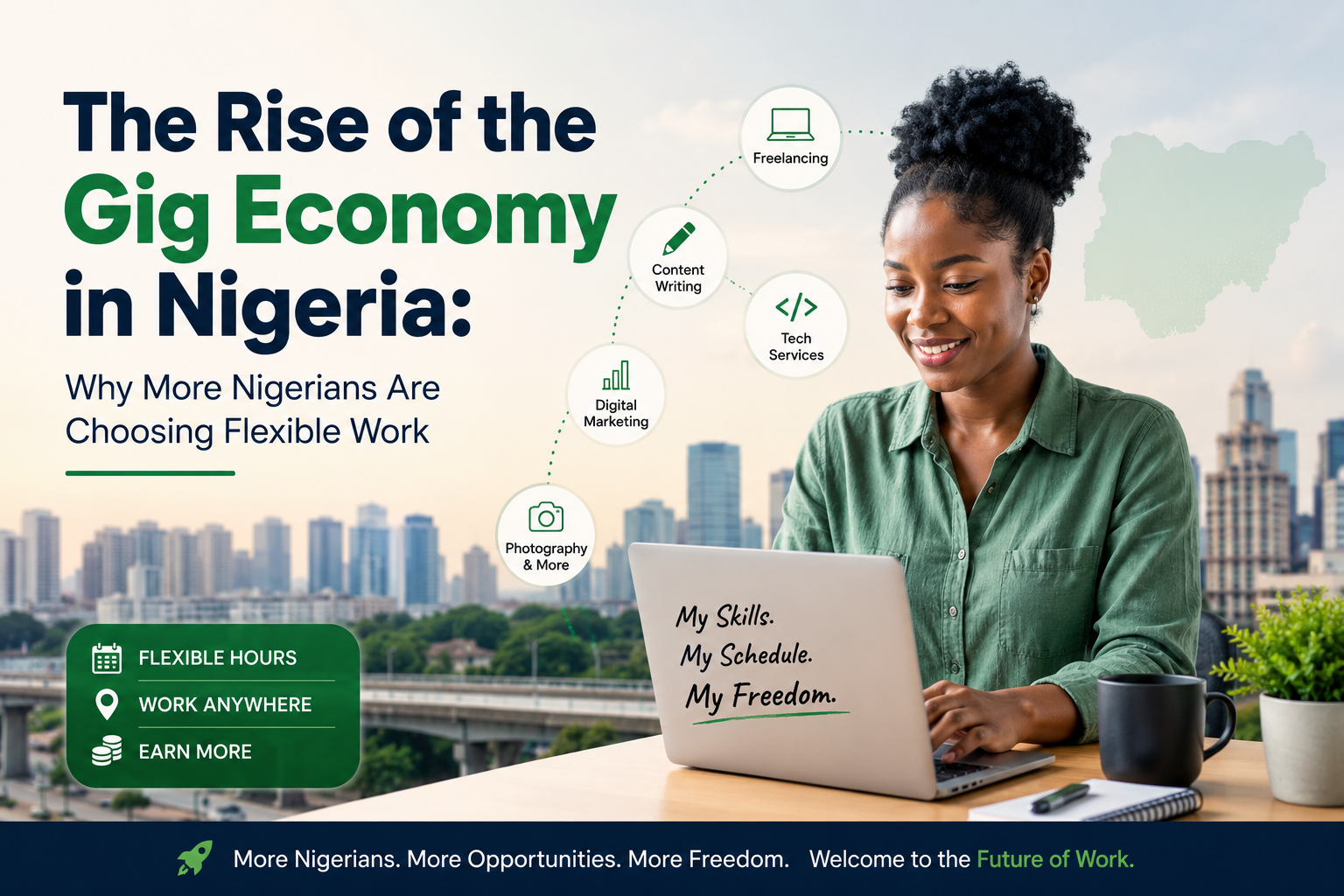

The way people work is changing across the world, and Nigeria is no exception. Gone are the days when a traditional 9-to-5 job was the only path to earning a living. Today, thousands of Nigerians are embracing flexible work arrangements, freelance opportunities, and short-term contracts as part of a growing trend known as the gig economy.
From graphic designers and social media managers to electricians, tutors, photographers, and delivery riders, more people are earning income by offering their skills and services on demand.
What is the Gig Economy?
The gig economy refers to a labor market where individuals earn income through temporary jobs, freelance projects, contract work, and service-based engagements rather than permanent employment.
In simple terms, people are paid for specific tasks or projects, often referred to as “gigs.”
Examples of gig workers in Nigeria include:
* Graphic designers
* Web developers
* Content creators
* Social media managers
* Private tutors
* Photographers and videographers
* Event planners
* Electricians and plumbers
* Drivers and dispatch riders
* Makeup artists and fashion designers
These professionals work independently, serving multiple clients and often setting their own schedules.
Why the Gig Economy is Growing in Nigeria
1. High Youth Unemployment
Nigeria has one of the largest youth populations in Africa. With limited formal employment opportunities available, many young people are turning to freelancing and service-based work to generate income.
The gig economy offers an alternative pathway to financial independence without waiting for traditional job opportunities.
2. Increased Internet Access
The widespread use of smartphones and affordable internet services has made it easier for Nigerians to find work, market their services, and connect with clients.
Today, a freelancer in Osogbo can work for a client in Lagos, Abuja, London, or New York without leaving home.
3. Demand for Specialized Skills
Businesses increasingly prefer hiring freelancers for specific projects instead of maintaining large permanent teams.
This allows companies to reduce costs while accessing skilled professionals when needed.
4. The Rise of Digital Skills
Skills such as digital marketing, content creation, video editing, graphic design, and virtual assistance have created new earning opportunities for young Nigerians.
Many people are building successful careers without owning a physical office or business location.
Benefits of the Gig Economy
Flexibility
Gig workers can choose when, where, and how they work.
Multiple Income Streams
Instead of depending on a single employer, individuals can serve multiple clients and increase their earning potential.
Skill Development
Freelancers often gain experience across different industries, helping them build valuable and diverse skill sets.
Entrepreneurial Growth
The gig economy encourages individuals to think like business owners, managing clients, pricing, branding, and service delivery.
Challenges Facing Gig Workers in Nigeria
Despite its opportunities, the gig economy comes with challenges.
Inconsistent Income
Work opportunities may vary from month to month, making income less predictable.
Lack of Job Security
Most gig workers do not enjoy benefits such as pensions, health insurance, or paid leave.
Difficulty Finding Trusted Clients
Many talented individuals struggle to connect with genuine clients who are willing to pay fairly for their services.
Competition
As more people enter the gig economy, standing out requires strong skills, professionalism, and continuous learning.
How KwickWork is Supporting the Gig Economy
At KwickWork.ng, we believe that opportunities should be accessible to everyone, regardless of their background or profession.
Our platform is designed to connect skilled professionals, artisans, freelancers, and service providers with individuals and businesses seeking their services.
Whether you are a graphic designer looking for clients, a private tutor seeking students, or an artisan searching for jobs, KwickWork helps bridge the gap between talent and opportunity.
By creating a trusted marketplace for work and services, we are contributing to the growth of Nigeria’s gig economy while helping more people earn sustainable incomes.
The Future of Work in Nigeria
The gig economy is no longer a trend—it is becoming a major part of Nigeria’s workforce. As technology continues to evolve and businesses seek flexible talent solutions, the demand for freelancers and skilled professionals will continue to grow.
For young Nigerians, this presents an exciting opportunity to learn valuable skills, build personal brands, and create multiple income streams.
The future belongs to those who can adapt, learn, and provide value. Whether through freelancing, digital services, skilled trades, or entrepreneurship, the gig economy offers countless possibilities for those willing to embrace it.
Our Final Thoughts
The gig economy is reshaping how Nigerians work, earn, and build careers. While traditional employment remains important, flexible work opportunities are opening doors for millions of people across the country.
If you are a job seeker, freelancer, artisan, or skilled professional, now is the time to position yourself for the opportunities that this new economy provides.
Join KwickWork.ng today and become part of Nigeria’s growing community of skilled professionals connecting work with opportunity.